|
Predatory Mites
for Pest, Mite, & Thrips Control
|
For Bulletins on how to use each
predator in a biocontrol program see Bulletins.
Care on delivery: Release mites
soon after receiving. Hold at approximately 50
°
F (10
°
C) for up to two days. A foam box with frozen cold pack is ideal for holding predators.
|
Thrips Biocontrols -
For Western flower thrips and onion thrips in nurseries and greenhouses, first apply Hypoaspis and
Cucumeris in loose bran to seedlings. Hypoaspis attacks immature stages in soil, Cucumeris attack thrips
only on the leaves. In wetter media (rock wool), Hb nematodes attack pupating thrips better than
Hypoaspis. Apply more Cucumeris when plants are set out. Work towards a 1:1 ratio of Cucumeris and
thrips. In crops with a low tolerance
|
In crops with a low tolerance for thrips damage—cucumbers and peppers—one round of slow-release hangable sachets of Cucumeris protect flowers and fruit for six to eight weeks. Orius works on thrips in the flowers, but use only when thrips are present and under control and when day length exceeds 16 hours (after March). Neither the predatory mites nor Orius are used for larger thrips (Greenhouse and Citrus Thrips). Lacewing larvae eat all large as well as small sized thrips.
Product descriptions in table:
|
| BENEFICIAL |
TARGET PEST |
RATE/FREQ |
CODE |
QUANTITY |
PRICE |
|
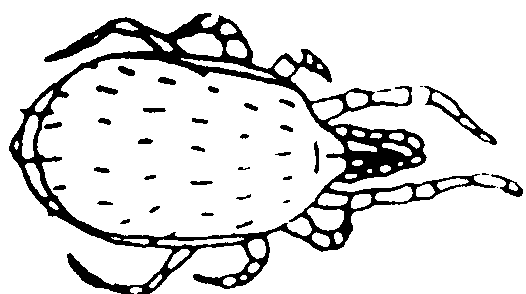
Amblyseius cucumeris
predatory mite,thrips predatorin bran carrierspecify fast
release for quicker control, or slow release for prevention
no diapause
|
Western flower thrips,
onion thrips, (lesser extentcyclamen, broad mites)66-80° F, 65-72% RH survives on
pollenstart when thrips population lowplace fast release at base of plant, hang slow release touching
plant
|
10-100/plant
1-30/ft
2
1 X wk, 3-6 X
|
AC1-F
fast release
|
1,000/bag
|
3.00
|
|
10+ bags
|
2.20
|
|
50+ bags
|
1.30
|
| 100+ bags |
1.17
|
|
AC20-B
bulk fast release,
liter bottle
|
20,000/tube
|
33.70 |
|
2+ tubes
|
25.00
|
|
|
|
|
AC50
bulk fast release,
liter bottle
|
50,000/tube
|
39.00
|
|
2+ tubes
|
33.00
|
|
5+ tubes
|
27.00
|
|
|
|
|
AC250
bulk fast release,
250,000 mites per 5L bag
|
1+ bags |
109.00
|
| 2+ bags |
96.00
|
|
|
|
|
AC500
bulk fast release, 500,000 mites per 10L bag
|
1+ bags |
178.00 |
| 2+ bags |
168.00 |
| 5+ bags |
159.00 |
|
AMBLYSEIUS CUCUMERIS, SLOW RELEASE, SATCHETS AND MINI-SACHETS
|
| BENEFICIAL |
TARGET PEST |
RATE/FREQ
|
CODE |
QUANTITY |
PRICE |
|
Aprox 1,000 mites, all stages with food in sachet (bag) with hanger. Mites exit over 6-8
week period to suppress thrips
|
thrips on plants with no pollen, esp. cucumbers, peppers, ornamental baskets – where
bran carrier is a negative
|
bag/1-5 plant
1-4 X/moreplace 2 mo
hang on plant
|
AC1-S
slow release
|
1,000/bag |
3.40
|
|
10+ bags
|
2.50 |
|
50+ bags
|
1.64 |
|
100+ bags
|
1.30
|
|
AC100-B
100 sachets with hooks, 1,000 mites/sachet, 100,000 total
|
1+ cases |
59.60 |
|
|
|
|
|
AC200-B
200 sachets with hooks, 1,000 mites/sachet, 200,000 total
|
1+ cases |
86.00 |
|
|
|
|
|
AC500-B
200 sachets with hooks, 1,000 mites/sachet, 500,000 total
|
1+ cases |
172.00 |
| 2+ cases |
165.00 |
| 5+ cases |
153.00 |
|
|
|
|
|
|
|
|
|
ACSTX1
100 sachets with sticks, 250 mites/sachet, 25,000 total
|
1+ cases |
45.00 |
| 2+ cases |
37.50 |
| 5+ cases |
31.00 |
|
|
|
|
|
|
|
|
|
|
|
|
|
|
|
|
|
|
|
|
|
AMBLYSEIOUS ANDERSONI AND AMBLYSEIUS SWIRSKII,
BULK
|
| BENEFICIAL |
TARGET PEST |
RATE/FREQ
|
CODE |
QUANTITY |
PRICE |
| Amblyseius andersoni, predatory mite. Best for prevention. May
diapause in late summer. |
Red mites, two-spot, Russet, gall mites, and often thrips |
2-3 /10 sq ft
1/2 Liter /Acre
|
|
|
|
|
|
|
|
|
|
Amblyseius swirskii, predatory mite. Requires >70 deg F to develop. Does not diapause. Best
when pollen is available (population grows 9x faster). Avoids webbing, hot spots, & honeydew.
**Eats Aphidoletes and Persimilis eggs.
Better for chili thrips than A. cucumermis, in hot conditions
|
whitefly larvae; Bemisia, GHWF, thrips eggs, russet mites, spider mites, broad
mites |
2-5 /sq ft
25k-50k /Acre
|
PMS25-B |
1 bag |
67.00 |
| 2+ bags |
57.00 |
| 5+ bags |
46.50 |
|
PMS50-B
50,000 mites in a liter tube with bran & vermiculite
|
1 tubes |
96.00 |
| 2+ tubes |
89.00 |
| 10+ tubes |
78.50 |
|
PMS125-B
125,000 mites in a 5 liter bag with bran & vermiculite
|
1 bag |
186.00 |
| 2+ bags |
176.00 |
| 10+ bags |
168.00 |
| |
|
|
|
|
|
|
PREDATORY MITES, SLOW RELEASE SACHETS
|
| BENEFICIAL |
TARGET PEST |
RATE/FREQ
|
CODE |
QUANTITY |
PRICE |
| Amblyseius andersoni, predatory mite. Best for prevention. May
diapause in late summer. |
Red mites, two-spot, Russet, gall mites, and often thrips |
1 sachet /6-13 ft crop row
1 mini sachet per 6 ft crop row
|
PMA200
200 mini sachets with hooks. 250 mites /sachet (50,000 total)
|
1 case |
171.00 |
| 2+ cases |
162.00 |
| 10+ cases |
154.00 |
|
Neoseiulus californicus
warm (50° - 105°F) humid (40% - 80% RH) conditions, also tolerates low humidity
|
Pacific, cyclamen, TSSM,
good for lower spider mite densities, survives on pollen
|
1 sachet per 5 plants
|
PMC200
200 mini sachets with hooks. 125 mites /sachet (25,000 total)
|
1 case |
185.00 |
| 2+ cases |
177.00 |
| 10+ cases |
168.00 |
|
Amblyseius swirskii, predatory mite. Requires >70 deg F to develop. Does not diapause. Best
when pollen is available (population grows 9x faster). Avoids webbing, hot spots, & honeydew.
**Eats Aphidoletes and Persimilis eggs.
Better for chili thrips than A. cucumermis, in hot conditions
|
whitefly larvae; Bemisia, GHWF, thrips eggs, russet mites, spider mites, broad
mites |
1 sachet /6-13 ft crop row
1 mini sachet per 6 ft crop row
|
PMS100-B
or
PMSSTX1
100 mini sachets with hooks. 250 mites /sachet (25,000 total)
*on hooks or sticks
|
1 case |
77.00 |
| 5+ cases |
67.00 |
| 10+ cases |
57.00 |
|
PMS500-B
or
PMSSTX5
500 mini sachets with hooks. 250 mites /sachet (125,000 total)
*on hooks or sticks
|
1-4 cases |
194.00 |
| 5+ cases |
184.00 |
| 10+ cases |
176.00 |
|
PMS1K-B
or
PMSSTX1K
1,000 mini sachets with hooks. 250 mites /sachet (250,000 total)
*on hooks or sticks
|
1 case |
342.00 |
| 2+ cases |
333.00 |
| 10+ cases |
323.00 |
|
Plant-Feeding Mite Biocontrols – The best predatory
mites for aggressiveness against two-spotted spider mite (TSSM) are Persimilis and Fallacis as
long as conditions are not too hot or dry. Fallacis also eats other mites. The other predatory mites or
mixtures that are available are better suited for warmer, dryer or less dense pest conditions as
indicated in Target Pest column below. Making early, proactive releases to achieve a predator to prey
ratio of 1:10
|
ensures control in a reasonable time. Insect agents also used against mites are Stethorus,
Feltiella, six-spotted thrips and green lacewing. Coleomegilla, Harmonia and Hippodamia also eat mites
and mite eggs. Using more than one predator adds diversity and stability to your biocontrol program. See
more about these insects for mite biocontrol on the bottom of page 15. See page 18 for checking quality
and holding overnight.
|
Persea Mite
Biocontrols - Helveolus, Annectens or a mixture of one of these with Californicus are used to
attack Persea mite in avocados. Franklinothrips, a naturally occurring predator, may become available.
Prices for predator mites depend on source and size of unit. Prices have been increasing.
|
BENEFICIAL
|
TARGET
|
RATE/FREQ
|
CODE
|
QUANTITY
|
PRICE
|
|
Feltiella acarisuga
Spider Mite Predator predatory midge
|
2-spot spider mite (TSSM)
good for tomato, in greenhouse, strawberries, row crops
|
250-1K/acre
1 wk I,
3 X
|
FEL250
|
250/tray
|
91.00
|
|
2+ trays
|
82.00
|
|
10+ trays
|
75.00 |
|
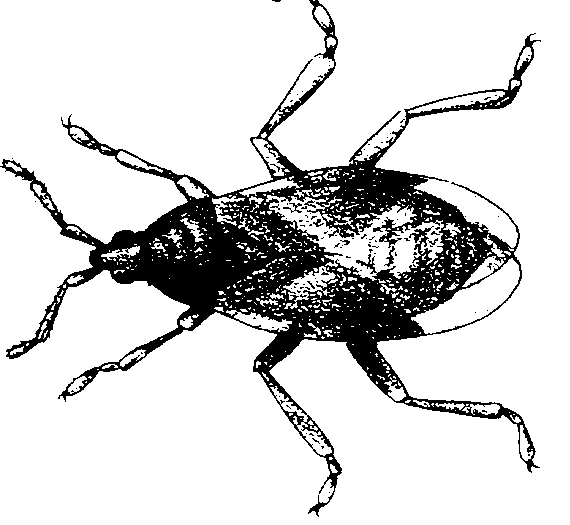
Orius insidiosus
Minute Pirate Bug
predatory bug
|
thrips & other soft- bodied insects
|
250-5K/ac
1-2/
40 ft
2
14/plant
|
OR500-B
|
500/bottle
|
65.00
|
|
2+ bottles
|
51.00
|
|
10+ bottles
|
46.00
|
| OR1000-B |
1,000/bottle |
94.00 |
|
2+ bottles
|
86.00 |
|
10+ bottles
|
79.50 |
| OR2000-B |
2,000/bottle |
140.00 |
|
2+ bottles
|
129.00 |
|
10+ bottles
|
123.00 |
|
Stethorus
punctillum
Spider Mite Destroyer,
predatory beetle
no diapause, active >54º F (12º C)
|
spider mites
esp. cucumber, pepper (not on tomato)
|
200-500/acre
low level preventive
|
ST50
|
50/vial
|
69.00
|
|
2+ vials
|
61.00
|
|
ST100
|
100/vial
|
99.00
|
|
2+ vials
|
89.00
|
Aphid Biocontrol
Mealybug, Scale and Whitefly Biocontrol
Mite and Thrips Biocontrol
Caterpillar (Moth) Biocontrol
Fly Control
Leafminer and etc Biocontrol
Back to Top
|