| LACEWING: OUR MOST COST-EFFECTIVE PREDATOR |
Lacewing can be released in the adult, egg and larval stages. Our main recommendation is to
proactively augment and colonize, and not rely on lacewing to rescue plants from pests. The alligator-shaped
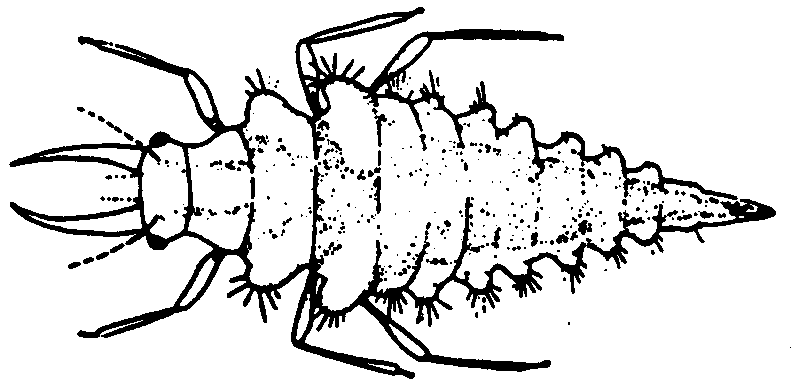
larva is the predatory stage on all kinds of prey. Flowering plants keep the adults in the vicinity. For
success using green lacewing:
Insect Food and/or Predalure may draw predators from nearby to lay eggs whose larvae are poised to eat the next generation of the pest. |
| GREEN LACEWING EGGS | |||||
| BENEFICIAL | TARGET PEST | RATE/FREQ | CODE | QUANTITY | PRICE |
| Chrysoperla rufilabris
lacewing eggs normally come in bags with rice hulls, but can be packed in cups with no carrier or other custom packaging
|
all soft-bodied insects, mites, mite eggs, whitefly,
mealybug, thrips, scale crawlers, small caterpillar, aphids, lerp psyllids
small larvae eat mites, mite eggs and insect eggs, at about 7 days old they start eating aphids,
|
1K+/ 2,500 ft
2
2-30K/ acre 2 wk I, 2-4 X
1/20 pest 2/ft2 GH 1K/euc treefor lerps |
LW1-cup | 1,000 | 12.00 |
| 10+ units | 9.50 | ||||
| 20+ units | 6.50 | ||||
| LW1-bag | 1,000 | 13.50 | |||
| 2+ units | 11.50 | ||||
| 10+ units | 10.00 | ||||
| LW5 | 5,000/bag | 28.00 | |||
| 2+ bags | 24.00 | ||||
| 10+ bags | 19.00 | ||||
| 20+ bags | Inquire | ||||
| 50+ bags | Inquire | ||||
|
|
LW eggs as laid on silk stalks |
LW10 | 10,000/bag | 38.00 | |
| 2+ bags | 32.00 | ||||
| 5+ bags | 29.00 | ||||
| 10+ bags | 24.00 | ||||
| LW50 | 100,000/bag | 115.00 | |||
| 2+ bags | 106.00 | ||||
| 10+ bags | 95.00 | ||||
| LW125 | 125,000/bag | 250.00 | |||
| 5+ bags | 240.00 | ||||
|
lacewing eggs, bulk (minimum order 5,000) |
lacewing larva, 3rd instar |
LW250 | 250,000/bag | 465.00 | |
| 2+ | 456.00 | ||||
| 5+ | Inquire | ||||
| 10+ | Inquire | ||||
| 20+ | Inquire | ||||
| GREEN LACEWING EGGS ON CARDS | |||||
|
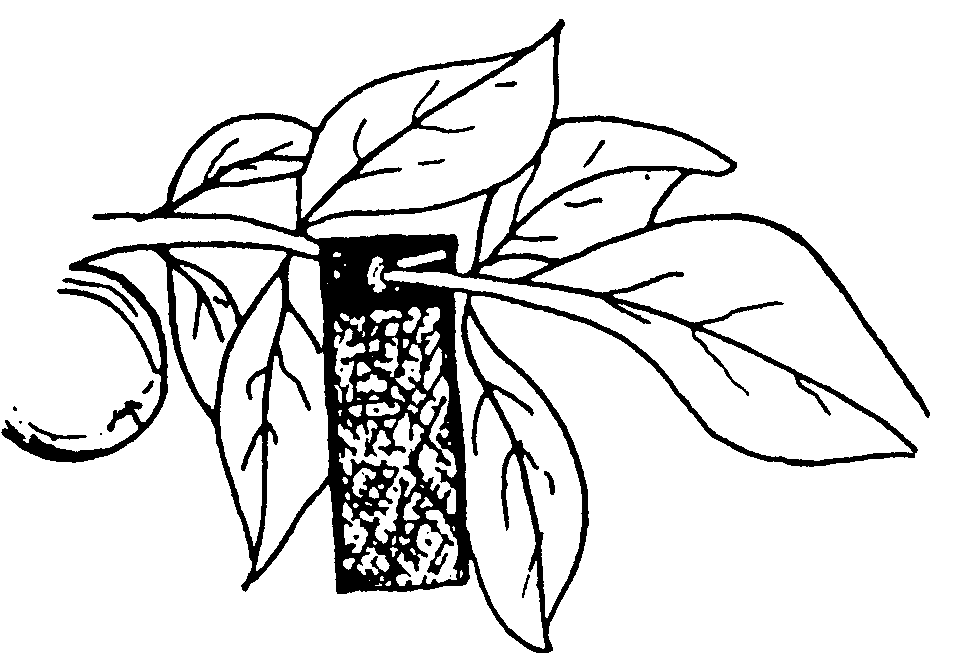
Lacewing eggs on cards are made on black cardstock, perforated so that they can be separated into 30 tabs, each 0.75 inch by 2.2 inches, with a hook designed by us for hanging on trees, bushes and vines. The eggs are glued on with a mixed medium including nonviable moth eggs for food. Instructions: When you get the card, divide it into 30 hangable units and keep at around 70-75F (21-24C) until the first larvae appear, usually in the morning. Move quickly when you see tiny larvae. They may start eating a few unhatched eggs on the card. This is how they work, and provides good nutrition for the first wave of hatching larvae. It is preferable to allow some cannibalism by earlier hatchers than to put out cards too early leaving younger eggs vulnerable to predators in the field. Open the hook and place on a twig or leaf on the sunny side of a plant, but not in direct sun or in the presence of ants. Lacewing pupae are sensitive to toxic exposure, especially sulfur dust and oil sprays. |
|||||
| BENEFICIAL | TARGET PEST | RATE/FREQ | CODE | QUANTITY | PRICE |
|
LW eggs on
cards
consist of 30 hangable tabs/full card
|
Cards with 1,000 Lacewing eggs break into 10 hangable tabs
Cards with greater than 1,000 eggs break into 30 hangable tabs |
hang 1-2 units/ bush 1-5 units/ tree 1-2 units/ trellised tomato 2 wk I, 2-4 X |
LWC1 10 tabs |
1,000/card | 23.00 |
| 5+ cards | 17.50 | ||||
| 10+ cards | 12.30 | ||||
| LWC2 | 2,000/card | 32.00 | |||
| 2+ cards | 25.00 | ||||
| 5+ cards | 17.50 | ||||
| LWC5 | 5,000/card | 42.00 | |||
| 2+ cards | 33.00 | ||||
| 10+ cards | 25.00 | ||||
| LWC10 | 10,000/card | 68.00 | |||
| 2+ cards | 59.00 | ||||
| 10+ cards | 45.00 | ||||
| 20+ cards |
Inquire |
||||


| LACEWING LOOSE EGGS, LARVAE AND ADULTS | |||||
|
Hatching Eggs and Larvae can be purchased as eggs incubating in transit with or without carrier and (nonviable) moth egg food. With or without carrier, lacewing eggs are a great buy for small releases. If you can monitor hatching closely, order with no carrier. If you can't pay close attention, order with carrier. Larvae can also be purchased when more are hatching, packaged with more food in bottles or cups, incubated and ready to release. Instructions: There are many methods for releasing hatching eggs and larvae depending on scope and type of foliage: by hand, dropped over rows from a boom on a tractor or robot, or blown or sprayed into trees. Biobee BugFlow & homemade blowers are options for releasing lacewings eggs & larvae at scale. For large areas we suggest using a blower attached to an ATV for hatching eggs with no carrier which is also the best form for aerial release by helicopter or drone. Adults are convenient and cost-effective at locations with supporting habitat, early timing, and monitoring. As few as 1000-2000 adults per acre, 10 to 20 per tree, or 2-3 per 200 sq ft of greenhouse can be a good start, more for heavy infestations. Adults lay hundreds of eggs that become hungry larvae in 7-10 days. Instructions: Be proactive, releasing smaller numbers of lacewing at two week intervals starting at the first sign of pests. Do not refrigerate adults; keep them at room temperature if release is delayed, ensuring the moisture source is hydrated. Put them out immediately within 24 hours of receipt during cool, calm evenings (or early morning) to minimize flight. Shake them onto foliage and ensure flowering plants nearby. Check within a week for adults resting in the canopy. Look for their eggs on stalks. Monitor at dusk in habitat plants like corn or buckwheat, or near lights. If pest populations are not decreasing in two weeks, another release of adults is suggested. The container will have a few eggs inside that you can incubate and release when they turn from green to whitish gray about to hatch into predatory larvae (about 4 days). |
|||||
| BENEFICIAL | INFORMATION | RATE/FREQ | CODE | QUANTITY | PRICE |
|
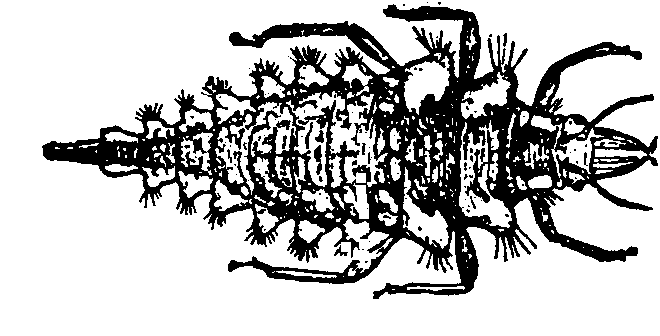
Lacewing larvae
ready to feed on pests as soon as they hit the plant
|
400 larvae, standard honeycomb, hexcell, or verticel unit
remove organdy mesh from a few cells, turn over, tap onto plants |
100/tree
20/bush
lacewing larva, 1st |
LWLAR | 1 unit | 29.00 |
| 2+ units | 24.50 | ||||
| 5+ units | 20.00 | ||||
| 20+ units | Inquire | ||||
|
LW Larvae in bottles
C. rufilabris, rice hulls/food |
1,000
or 5,000 larvae/bottle,
|
1 wk notice required |
LWLBOT
|
1,000 /bottle | 45.00 |
| 2+ bottles | 39.00 | ||||
| 10+ bottles | 33.00 | ||||
|
LWBAG5
|
5,000 /bag | 118.00 | |||
| 2+ bags | 110.00 | ||||
| 10+ bags | 103.00 | ||||
| LWBKT10 | 10,000 /bucket | 195.00 | |||
| 2+ buckets | 186.00 | ||||
| 10+ buckets | 177.00 | ||||
|
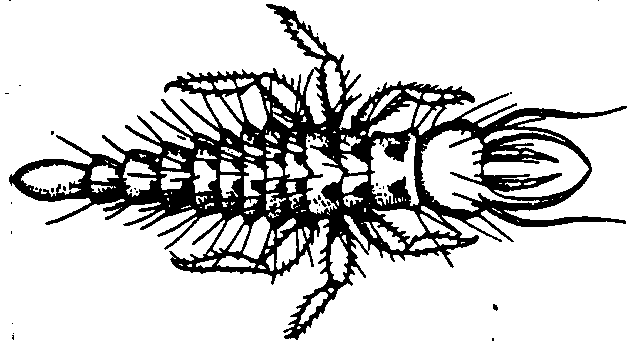
>50% females
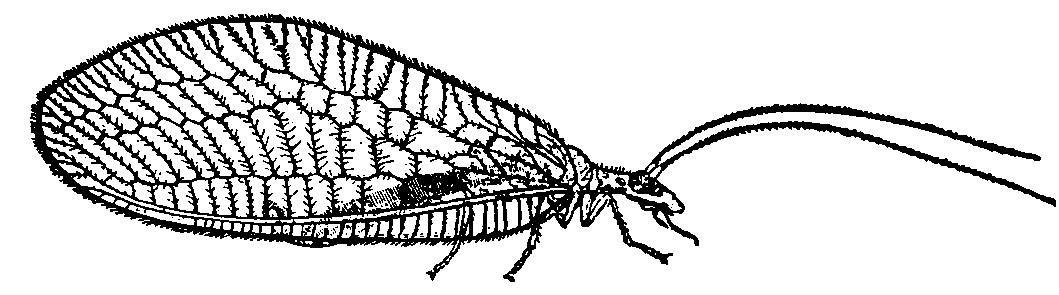
|
release in trees, greenhouse

|
200-500/acre 1-3/200 ft 2 GH |
LWA100 |
100/unit |
68.00 |
|
2+ units |
58.00 |
||||
|
10+ units |
52.00 |
||||
|
100/tree |
LWA250 |
250/unit |
99.00 |
||
|
2+ units |
90.00 |
||||
|
10+ units |
Inquire |
||||
| LWA1K |
1000/unit |
159.00 | |||
|
2+ units |
150.00 | ||||
|
10+ units |
Inquire |
| GREEN LACEWING - CHRYSOPERLA COMANCHE | |||||
|
Rincon-Vitova is producing the species Chrysoperla comanche coming from citrus trees in Hemet and thriving in many farming areas of California and as far north as Fresno. We are producing larvae for a study at UC Riverside evaluating a biocontrol program against Asian citrus psyllid. We are looking forward to a limited supply of eggs and adults to sell in May. |
|||||
| BENEFICIAL | INFORMATION | RATE/FREQ | CODE | QUANTITY | PRICE |
|
|
Limited Availability Beginning in May - Waiting List |
|
LWA-Co15 |
15 Adults |
35.00 |
|
2+ units |
25.00 |
||||
|
10+ units |
Inquire | ||||
| Chrysoperla comanche Eggs | LWE-Co500 | 500 Eggs | 25.00 | ||
| 2+ units | 17.00 | ||||
| 10+ units | Inquire | ||||
| PREDATORS & PARASITES SPECIALIZING IN APHID CONTROL | |||||
| BENEFICIAL | TARGET PEST | RATE/FREQ | CODE | QUANTITY | PRICE |
|
Aphelinus
abdominalis
Aphid Parasite parasitic wasp |
aphids, especially
peach, GH potato |
2-5/100 ft 2 1 wk I, 2-4 X |
APA250 | 250 vial | 89.00 |
| 2+ vials | 82.00 | ||||
| 10+ vials | 77.00 | ||||
|
Aphidius colemani
Aphid Parasite parasitic wasp |
melon/cotton aphid,
green peach aphid, other aphids |
500-3K/acre
1 wk I, 2-3 X |
ACOL500-B | 500/vial | 45.00 |
| 2+ vials | 37.00 | ||||
| 10+ vials | Inquire | ||||
| ACOL1-B | 1,000/vial | 69.00 | |||
| 2+ vials | 60.00 | ||||
| 5+ vials | 52.00 | ||||
| ACOL5K-B | 5,000/vial | 197.00 | |||
| 2+ vials | 183.00 | ||||
| 10+ vials | Inquire | ||||
|
Aphidius ervi
Aphid Parasite parasitic wasp |
aphids: potato, GH potato, pea, green peach (preference order) |
1-5/100 ft
2
1 wk I, 3-6 X |
AERVI-B | 250/vial | 67.00 |
| 2+ vials | 58.00 | ||||
| 10+ vials | Inquire | ||||
| AERVI5-B | 500/vial | 98.00 | |||
| 2+ vials | 89.00 | ||||
| 10+ vials | Inquire | ||||
| AERVI1K-B | 1,000/vial | 142.00 | |||
| 2+ vials | 133.00 | ||||
| 10+ vials | Inquire | ||||
|
Aphiline
ACE mix
Aphelinus abdominalis, Aphidius colmani, A. ervi 1:2:1 ratio
|
aphids, 25 different species |
1-5/10 ft
2
1 wk I, 2-4 X |
A-ACE5 | 500/bottle | 98.00 |
| 2+ bottles | 90.00 | ||||
| 10+ bottles | Inquire | ||||
|
Aphidius colmani, A. ervi 2:1 ratio |
aphids, 25 different species |
1-5/10 ft
2
1 wk I, 2-4 X |
A-CE5-B | 500/bottle | 82.00 |
| 2+ bottles | 73.00 | ||||
| 5+ bottles | 64.00 | ||||
| A-CE1K | 1,000/bottle | 126.00 | |||
| 5+ bottles | 117.00 | ||||
| 10+ bottles | Inquire | ||||
|
A-CE1K-BP
Blister Pack |
1,000/unit |
143 | |||
| 2+ units | 134.00 | ||||
| 10+ units | Inquire | ||||
|
A-CE5K-BP
Blister Pack |
5,000/unit |
535.00 | |||
| 2+ units | 526.00 | ||||
| 10+ units | Inquire | ||||
|
Aphid-MACE mix A. matricariae, Aphelinus abdominalis, A. colmani, A. ervi |
A-MACE-B
*Ships separately |
750/bottle
|
98.00 | ||
| 2+ bottles | 89.00 | ||||
| 5+ bottles | 83.00 | ||||
|
Aphidius matricariae
Aphid Parasite, parasitic wasp no diapause tolerates low night temps. 50º F (10º C) |
green peach aphid, 40 other species, not cotton or potato, seeks scattered aphid colonies |
500-3K/acre
1 wk I, 2-3 X |
A-MAT-BB
*Ships separately |
500/bottle | Inquire |
| 5+ bottles | Inquire | ||||
| 10+ bottles | Inquire | ||||
|
AMAT5-BB
*Ships separately |
5,000/bottle | 261.00 | |||
| 2+ bottles | 251.00 | ||||
| 5+ bottles | 240.00 | ||||
|
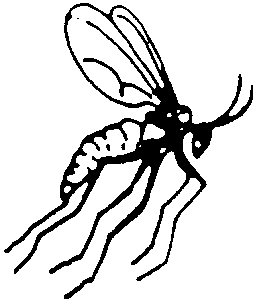
Aphidoletes aphidimyza
Aphid Predator predatory midge, pupae diapause daylight < 16 hours, temperatures < 54� F (12� C) supplemental light helps |
aphids, row crops, trees, greenhouse, larva predator, use with lacewing and ladybugs |
250/acre
2 wk I, 2-4 X1-6/plant2-5/tree
|
AA250 | 250/tray | 38.00 |
| 2+ trays | 32.50 | ||||
| 5+ trays | 25.00 | ||||
| AA1 | 1,000/tray | 64.00 | |||
| 2+ trays | 58.00 | ||||
| 5+ trays | 52.00 | ||||
| AA3 | 3,000/vial | 124.00 | |||
| 2+ vials | Inquire | ||||
| 5+ vials | Inquire | ||||
| AA5 | 5,000/vial | 179.00 | |||
| 2+ vials | 171.00 | ||||
| 5+ vials | 166.00 | ||||
|
PRAYING MANTIS |
||||
|
BENEFICIAL |
TARGETPEST |
QUANTITY |
CODE |
PRICE |
|
Praying Mantis Tenedera aridifolia sinesis egg case with 50-250 eggs avail Feb-June |
general predatory insects, hobby, education use, hatch at 70-90F, 40-95% RH, tie on bush above ground |
MANT |
1 egg case |
18.00 |
|
LADYBUGS |
|||||||||
|
BENEFICIAL |
TARGETPEST |
RATE/FREQ |
CODE |
QUANTITY |
PRICE |
||||
|
Adalia bipunctata "twice-stabbed" predatory Ladybug. Predatory on Aphids. 100 eggs per tube. Inquire about larvae. |
aphids | ADALIA | 100/tube | 48.00 | |||||
| 2+ tubes | 41.30 | ||||||||
| 10+ tubes | Inquire | ||||||||
|
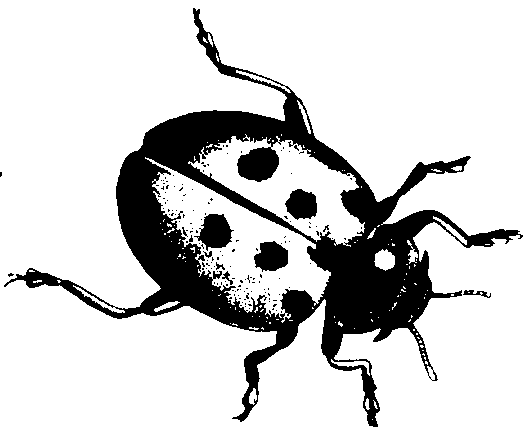
Ladybird Beetle Convergent Ladybug predatory beetle. Varying Availability.
|
aphids, soft-bodied insects & scale, attract ladybugs with Insect Food, see lures |
1/ft 2 GH ½-1 gal/acre1-2 X release, monitor, release again if needed |
LB1500 |
1500/bag |
SOLD OUT |
||||
Mealybug, Scale and Whitefly Biocontrol
Updated March, 2026