Long-term Fly Control
No Side Effects
Reduces Chemical Use
Natural, Organic
The beetles are so tiny that 250 can fit in a milliliter
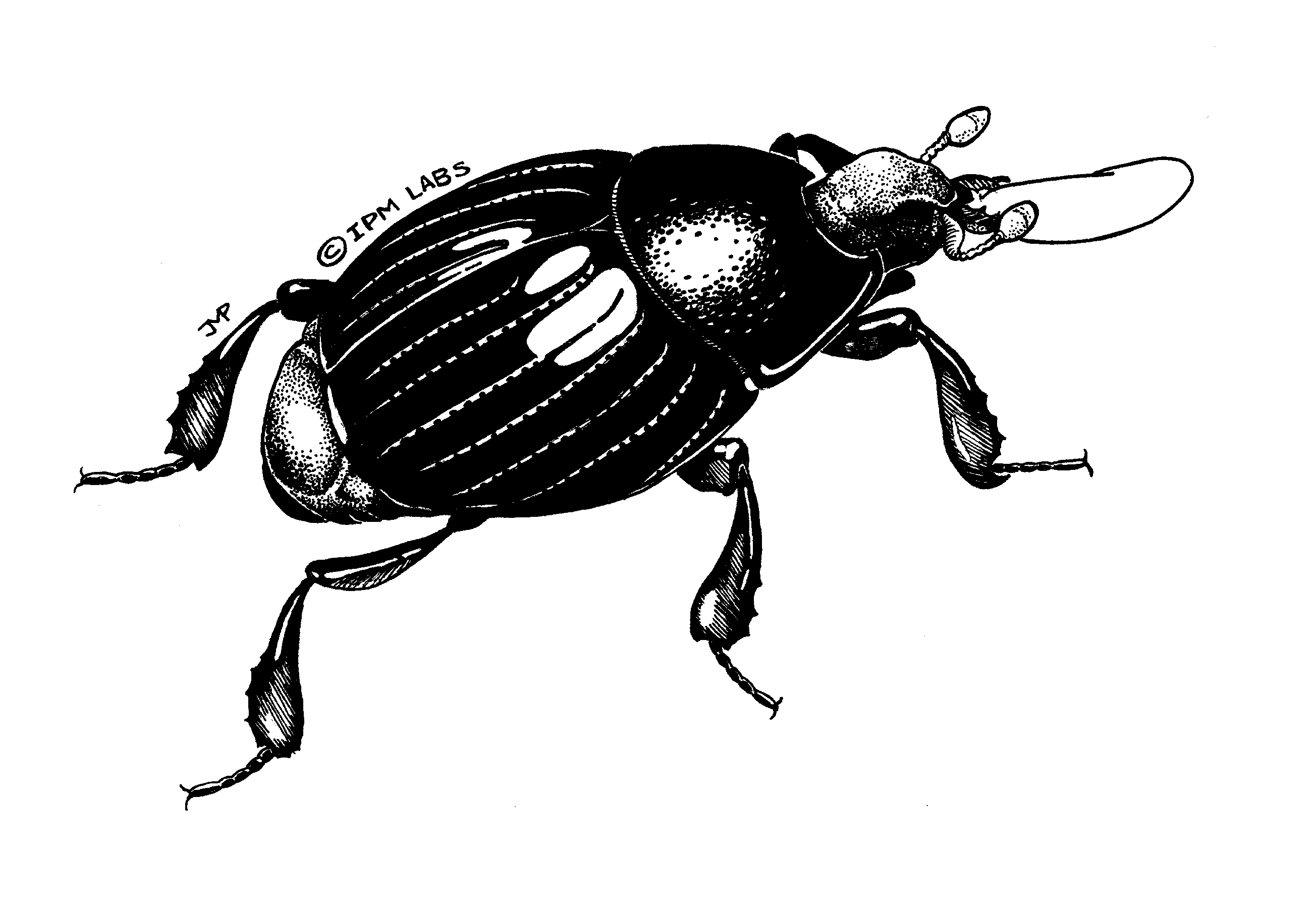
Carcinops pumilio (Hister Beetles) Prevent Fly Outbreaks
In Long-Term Poultry Manure AccumulationsFly control is excellent in manure packs that have high numbers of Hister Beetles. We have observed beetle densities as high as 250 beetles per quart of manure and 12 beetles per square inch of manure. Houses that have been completely cleaned out and disinfected often need to be recolonized with Hister Beetles.
|
Long-term Fly Control No Side Effects Reduces Chemical Use Natural, Organic The beetles are so tiny that 250 can fit in a milliliter |
|
They should not be confused with the much larger litter beetles (which are the same as darkling beetles and lesser mealworms). Litter beetles are brown and more than 1/4 inch long. Litter beetles destroy insulation and structures. Hister beetles do NOT harm insulation or structures.
Hister beetles are shiny black beetles that are slightly longer than 1/16 inch. When you normally see them, they will have
their legs and head tucked in under their bodies. The beetle in the illustration is crawling with a fly egg in its mandibles.
The Hister Effect
The Hister Beetle consumes large numbers of house fly eggs and small housefly larvae in poultry manure. Each adult destroys an average of 54 housefly immatures per day at 80º F. Hister larvae are also predaceous and highly aggressive.
Since Hister Beetles attack the early fly stages, your biological control program should include fly parasites to attack the flies that make it to the pupal stage.
Plan your next fly control program prior to clean-out
Call your beneficial insect supplier and set up a Fly Parasite introduction program to kill fly pupae
AND
Order Hister House™ beetle traps to collect and store homegrown beetles from manure prior to clean-out, OR, Order laboratory-reared Hister Beetle Adults to introduce into three week old manure
HISTER HOUSE™ Hister Beetle Trap United States Patent Number 5,930,945
JUST ADD WATER The Hister House™ is constructed to attract Hister Beetles and exclude litter beetles. The trap is a small box filled with bait that is activated by adding water. The beetles enter the trap through a screen that has openings that are too small for the litter beetle to push through but large enough for the Hister Beetle.
USE 100 TO 300 HISTER HOUSES™ per manure pit. These should trap 200 to 600 or more beetles per trap, yielding 20,000 to 180,000 or more beetles for transfer.
CATCHES CAN AVERAGE 600 BEETLES PER TRAP
where beetles are numerous. Up to 2000 hister beetles have been caught in the Hister House™ over a 24 hour period, Traps will catch less than a hundred beetles each in manure where there are few beetles. We recommend that traps not be used when there are less than 20 beetles per square foot.
TRAP AND STORE Collect beetles from manure accumulations prior to clean-out, and store the beetles until a new manure pile has started to accumulate. Beetles will not be harmed by two weeks of storage at 50º F. Mortality will be obvious at 10 weeks.
The Hister House was initially developed under USDA SBIR award #95-33610-1487
LAB-REARED ADULT HISTER BEETLES HISTER BEETLES FOR CLEAN CONDITIONS
Where beetles from another building or another manure are not desirable, lab-reared beetles are produced in an environment with no birds. IPM Laboratories' beetle colony is periodically tested for evidence of Salmonella, and remains Salmonella-negative.
TEN THOUSAND BEETLES PER PIT
An inoculation of 10,000 hister beetles is an effective way to assure colonization of the manure with hister beetles. Release beetles in small clumps onto every manure pile, as they do not travel easily between piles.
RELEASE INTO MANURE AT LEAST 3 WEEKS OLD
The beetles need habitat that has both dryness, moisture and food. Do not release into wet sites.
BEETLES ARE WELL-FED AND READY TO LAY EGGS
The beetle larvae that hatch from these eggs will start
consuming fly eggs immediately. The second generation of adult beetles will be begin to be evident 4 to 6 weeks after initial beetle introduction at 80ºF. The beetle populations will grow very slowly at 60º F.
Hister House is a trademark owned by IPM Laboratories, Inc. @1999 IPM Laboratories, Inc., Locke, NY
IPM Laboratories, Inc. warrants that the biological controls you receive will be alive and healthy when received and will contain the correct number of the species you ordered. However, as with any pest control measure, success cannot be guaranteed. IPM Laboratories. Inc. makes no guarantee, express or implied, as to the effectiveness of these products.
available from
Rincon-Vitova Insectaries, Inc.
PO Box 1555, Ventura, CA 93002
800-248-2847 * 805-643-5407 * fax 805-643-6267
e-mail bugnet@rinconvitova.com
web www.rinconvitova.com